International Red Cross
Black Hawk DownThe International Red Cross enters the account of Michael Durant’s captivity as a channel for contact with the outside world and as an organization attentive to the limits of its neutrality. A visit from its worker Suzanne Hofstadter allowed Durant to write to his family; later, officials removed initials from a separate note because they were concerned it might carry a coded message.
Contact with Michael Durant
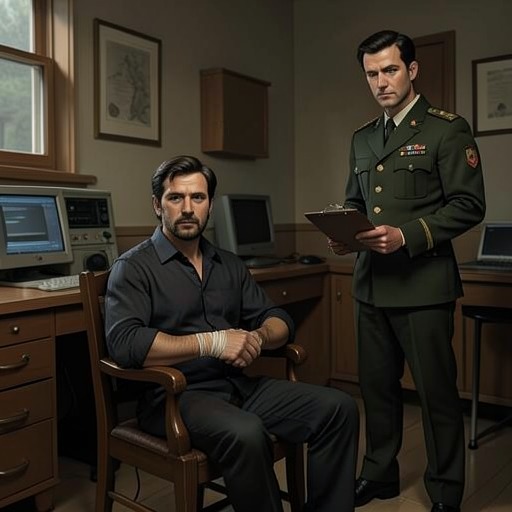
After five days in captivity, Durant received visitors. Suzanne Hofstadter, a Norwegian who worked for the International Red Cross, brought forms on which he could write a letter. He described his injuries, reassured his family that he was doing all right, and asked them to pray for the others. He still did not know what had happened to his crew or to the two soldiers who had descended to try to save him.
The letter gave Durant a way to communicate despite his isolation, but it could not answer the questions that weighed on him. He also asked to write to his comrades at the hangar. In that note, he said he was all right and referred to a bottle of Jack Daniels in his rucksack, using a lighthearted tone to lessen their worry. At the bottom he wrote the initials NSDQ.
Neutrality and the note
Red Cross officials later scratched out those initials. They were concerned that passing along a message that might be coded could violate the organization’s strict neutrality. The account does not explain the initials or say that the note was ultimately delivered; it records the officials’ decision as a precaution about the organization’s role as an intermediary.
That small alteration marks a limit on what the visit could provide. The forms enabled Durant to write, but communication through a neutral humanitarian organization was not simply a private exchange between a captive and his unit. Even a brief set of initials could raise questions about whether the organization was being asked to transmit something beyond personal reassurance.
Significance in the captivity narrative
Hofstadter’s visit also brought Durant into contact with someone from beyond his captors and the battlefield. After she left, two reporters were brought in. Durant had held Hofstadter’s hand until the last moment, reluctant to see her go; the scene presents the visit as a rare point of human connection during captivity, not as evidence that the International Red Cross could resolve his uncertainty about his crew.
The organization’s role is therefore shown through two linked actions: providing a means for a captive to write, and withholding potentially coded material in the name of neutrality. Together, they define the narrow but consequential space it occupied in Durant’s captivity: facilitating humanitarian contact while guarding against its channels being used for another purpose.